Anti-Death Penalty Strike in Ghezelhesar Prison Continues for 12th Day
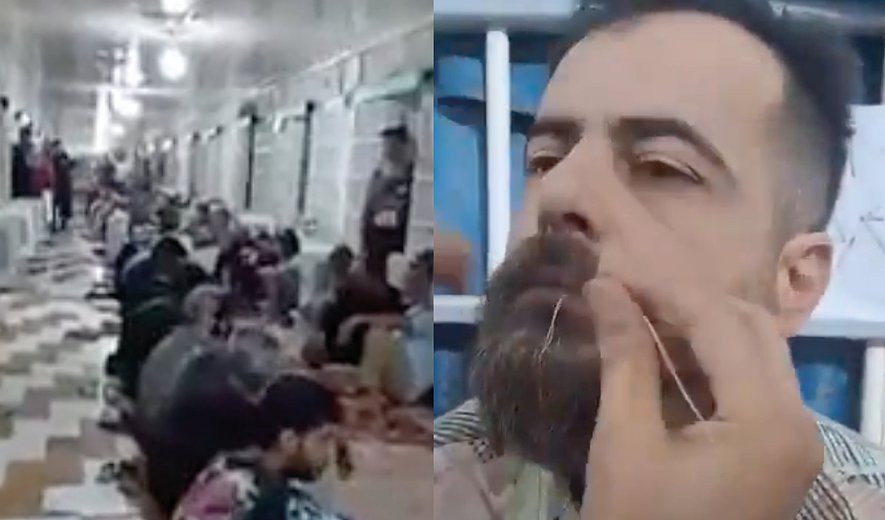
Iran Human Rights (IHRNGO); 24 July 2026: People on death row for drug-related offences in Unit 2 of Ghezelhesar Prison have entered the twelfth day of their sit-in strike to stop drug executions. Several of the strikers have sewn their lips shut.
According to information obtained by Iran Human Rights, Unit 2 of Ghezelhesar Prison entered the twelfth day of a sit-in strike to stop the executions of the six drug defendants transferred to the pre-execution solitary confinement cells of the prison on 13 July. At the time of writing, the men have not been returned from solitary confinement.
In a video published on the sixth day of the strike, a striker states that as no attention has been paid to their protest, he would be sewing his lips shut, which he does on camera. It is believed that around half a dozen strikers have sewn their lips shut thus far.
On the seventh day, families of the people on death row gathered outside Ghezelhesar Prison, where authorities violently cracked down on their protest. Relatives of people on death row for drug-related offences have staged multiple protests in the past years. In September 2022, the families protested outside parliament, revolutionary court and judiciary buildings for around a week before the start of the “Woman, Life, Freedom” nationwide protests. The families have also staged multiple protests as part of the “No Death Penalty Tuesdays” movement.
As well as attempting to save the lives of the men transferred to solitary confinement, the strikers are demanding the implementation of an amendment to commute their sentences to prison terms. They have called on the international community for support and solidarity in echoing their voices and urging the Islamic Republic to halt drug executions.
On 23 July, strikers reaffirmed their commitment to continuing their strike until their demands are met.
This collective action mirrors the historic protest of October 2025, when more than 1,500 prisoners on death row for drug offences in Unit 2 of Ghezelhesar Prison staged a mass six-day strike, sewing their lips shut to demand an end to executions. Supported by families demonstrating outside the parliament building in Tehran, the prisoners successfully pressured authorities to halt drug-related executions pending legislative amendments. Since the October 2025 strike, IHRNGO has recorded the secret execution of only one individual, Alireza Ahmadi, for drug offences at the prison.
In December 2025, IHRNGO published a report titled “A Village of Graves: Widespread and Systematic Drug Executions in Iran” which provides a comprehensive analysis of the laws and documents over 5,300 executions since 2010 that have disproportionately targeted ethnic minorities and impoverished communities. It exposes severe due process violations such as torture-tainted confessions and denial of legal counsel, illustrating the human toll through the case study of a single village where around seventy residents have been executed and nearly one hundred remain on death row.
The report urges the United Nations Office on Drugs and Crime (UNODC) to ensure its cooperation with Iran does not legitimise executions by making its funding and technical assistance strictly contingent upon an immediate moratorium on drug-related executions.
More from @ihrights
IHRNGO is building a strong civil society, through empowerment of the citizens, promoting and defending the human rights.
Latest Cartoon
Latest Report