Omid Behzad and Pourya Safvat Executed for Alleged Espionage for Israel
Iran Human Rights (IHRNGO); 3 August 2026: State media announced that Omid Behzad and Pourya Safvat, two men accused of sending military coordinates to Israel during the 12-Day and 40-Day Wars, were executed at an undisclosed location.
Since 28 February, at least twelve people have been executed on espionage charges, alongside 28 protesters (26 from the January protests and two from “Woman, Life, Freedom”) and thirteen political prisoners affiliated with banned opposition groups. Omid and Pourya are the second and third individuals to be executed for allegedly transmitting coordinates to foreign entities. Mojtaba Kian was hanged on 24 May, less than fifty days after his arrest.
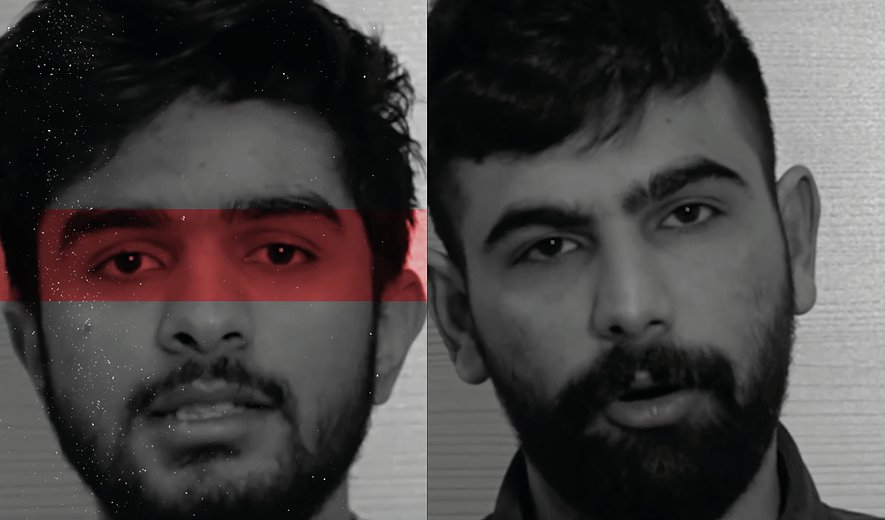
According to the judiciary’s Mizan News Agency, Omid Behzad (right photo) and Pourya Safvat (left photo) were hanged at an undisclosed location on 3 August 2026. They were sentenced to death on charges of “espionage and intelligence co-operation with the Zionist regime.” Following the announcement of their executions, a video of their coerced confessions was aired.
According to the official report, Omid Behzad was accused of using navigation software like Google Maps to gather coordinates, geographical locations and information on military sites during the 40-Day War. He is alleged to have sent them directly to a Mossad officer via Telegram and called “for a military attack on Iran by the United States and the Zionist regime.”
Pourya Safvat was accused of filming air defence systems from rooftops during the 12-Day War (13 to 24 June 2025) and transmitting coordinates, photos and videos of sensitive military sites both directly to Mossad and to Iran International. The report claims that several locations he identified were subsequently bombed.
No independent information is available about their cases.
At least fourteen people have been executed for espionage charges in 2026. Twelve were accused of espionage for Israel and the United States, and two Iraqi nationals were accused of espionage for an unknown Arab country. According to IHRNGO’s 2025 Annual Report on the Death Penalty in Iran, at least 13 people were executed for charges related to espionage for Israel. The surge began in the lead-up to the Twelve-Day War in June 2025; two people were executed prior to the war, three during the war and the remainder were executed after the war. It is important to note that in some cases, the defendants were not originally arrested for espionage charges. They were coerced and tortured into making self-incriminating confessions that were later used as the basis of their sentences. In 2026, two executions were carried out in January and twelve of the executions for espionage have been carried out since the 40-day war began on 28 February 2026.
This surge in executions has been legally underpinned by the newly enacted “Law on Intensifying the Punishment for Espionage and Cooperation with the Zionist Regime and Hostile States Against National Security and Interests,” which significantly broadens the scope of capital offences. Under this statutory framework, acts such as gathering intelligence, offering operational support or transmitting information and footage to foreign media entities carry a mandatory death sentence along with the confiscation of assets.
On 29 March, Iran's Head of the Judiciary, Gholamhossein Mohseni-Ejei, issued a directive which ordered the immediate trial and fast-tracking of all cases involving alleged collaboration with the United States and Israel under wartime conditions. Ejei stated that maximum statutory penalties, including execution and the complete confiscation of assets, would be applied “without leniency to dismantle foreign espionage chains.” This mandate triggered a broader judicial crackdown targeting individuals accused of sharing information, photographs or footage of “sensitive sites” with foreign media networks.
More from @ihrights
IHRNGO is building a strong civil society, through empowerment of the citizens, promoting and defending the human rights.
Latest Cartoon
Latest Report