Group Hanging of Five Men in Ghezelhesar Prison; At Least 600 Executions Recorded in 2026
Iran Human Rights (IHRNGO); 2 October 2026: State media reported the execution of five unnamed men in Ghezelhesar Prison. One of them has been identified as Rasoul Karimi by IHRNGO. More than 600 executions have been documented by IHRNGO in 2026.
According to Javan Online, five men were hanged in Ghezelhesar Prison on 30 September 2026. The unnamed men were all sentenced to qisas (retribution-in-kind) for murder by the Criminal Court.
Case One: A man who, following a dispute with his wife in late September 2020, went to her family’s home and fatally stabbed his wife’s parents during an altercation.
Case Two: A man who strangled a young woman while consuming narcotics in August/September 2019, subsequently setting her body on fire in the deserts of Robat Karim with the assistance of an accomplice.
Case Three: Two young men who broke into an elderly man’s home in May/June 2020 with the intent to commit robbery, binding his hands, feet and mouth, which ultimately caused the homeowner’s death during the robbery.
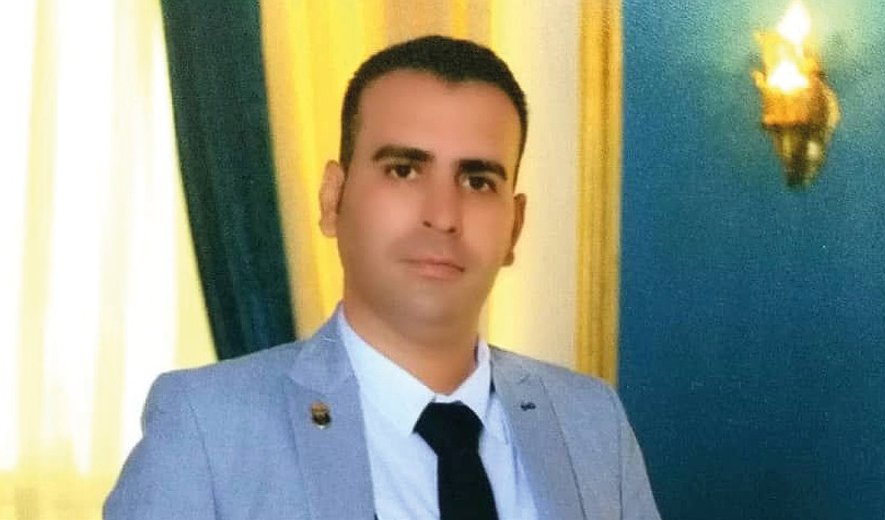
Case Four: A man who fatally shot his sister’s employer on 14 March 2024 near Afsariyeh, Tehran. In his “confessions,” the defendant cited the victim’s harassment of his sister as the motive for the killing. IHRNGO has established his identity as Rasoul Karimi (photo), a 42-year-old father who was accused of shooting a young man in the head with a handgun.
Those charged with the umbrella term of “intentional murder” are sentenced to qisas (retribution-in-kind) regardless of intent or mitigating factors due to a lack of grading in law. Once a defendant has been convicted, the victim’s family are required to choose between death as retribution, diya (blood money) or forgiveness.
Crucially, while an indicative diya amount is set by the Judiciary every year, there is no legal limit to how much can be demanded by families of the victims. IHRNGO has recorded many cases where defendants are executed because they cannot afford to pay the blood money. Should the victim’s family choose execution, they are not only encouraged to attend, but also to physically carry out the execution themselves.
According to IHRNGO’s 2025 Annual Report on the Death Penalty, at least 747 people including 48 women, were executed for murder charges, the highest number of qisas executions since 2010. Under 7% of the recorded qisas executions were announced by official sources. In 2025, IHRNGO also recorded 566 cases of families choosing diya or forgiveness instead of qisas executions. In the first nine months of 2026, at least 306 people were executed for murder charges.
More from @ihrights
IHRNGO is building a strong civil society, through empowerment of the citizens, promoting and defending the human rights.
Latest Cartoon
Latest Report