Abolhassan Ranjbar Hanged for Traffic Police Officer’s Accidental Death in Minab
Iran Human Rights (IHRNGO); 14 October 2026: Abolhassan Ranjbar, a Baluch man on death row for the alleged murder of a traffic police officer, was executed in Minab Prison. While state media framed his case as a premeditated vehicular assault carried out by an organised smuggling escort, independent testimonies obtained by IHRNGO reveal that the fatal collision was an accident provoked by police violence during a routine stop, with authorities subsequently fabricating contraband charges and relying on false witness testimony to convict him.
On 13 October 2026, Mizan News Agency announced the execution of an unnamed man in Minab on an unspecified date. IHRNGO has established his identity as Abolhassan Ranjbar, a 39-year-old Baluch man who was hanged in Minab Prison on 12 October 2026. He was sentenced to qisas (retribution-in-kind) by Criminal Court One of Hormozgan Province for the murder of a traffic police officer named Jasem Hosseinian.
The official account states that Hosseinian was killed in the line of duty at the Minab-Jask (Goudo) traffic police station during a crackdown on smugglers. While controlling passing vehicles, he was allegedly run over by a passenger car and later died from his injuries in hospital.
Following the fatal collision on 27 December 2023, state reports released on that same day by the IRIB News Agency immediately contradicted one another: Minab County Governor Majid Salahshour claimed the driver complied with the initial stop and struck Officer Hosseinian while he was checking documents and licence plates, whereas the Hormozgan Law Enforcement Command asserted in the exact same dispatch that the car ignored the stop order entirely and blew through the checkpoint while Hosseinian was directing routine traffic. The police command also alleged that the car was acting as a dedicated escort vehicle running interference for an organised contraband smuggling convoy. However, nearly a year later on 19 December 2024, when Hormozgan Chief Justice Mojtaba Ghahremani announced the death penalty verdict through Mizan News Agency, the state retroactively elevated Hosseinian's role from routine traffic duty to an active anti-smuggling operation, yet entirely dropped the earlier claim that the vehicle was a smuggling escort from the formal indictment.
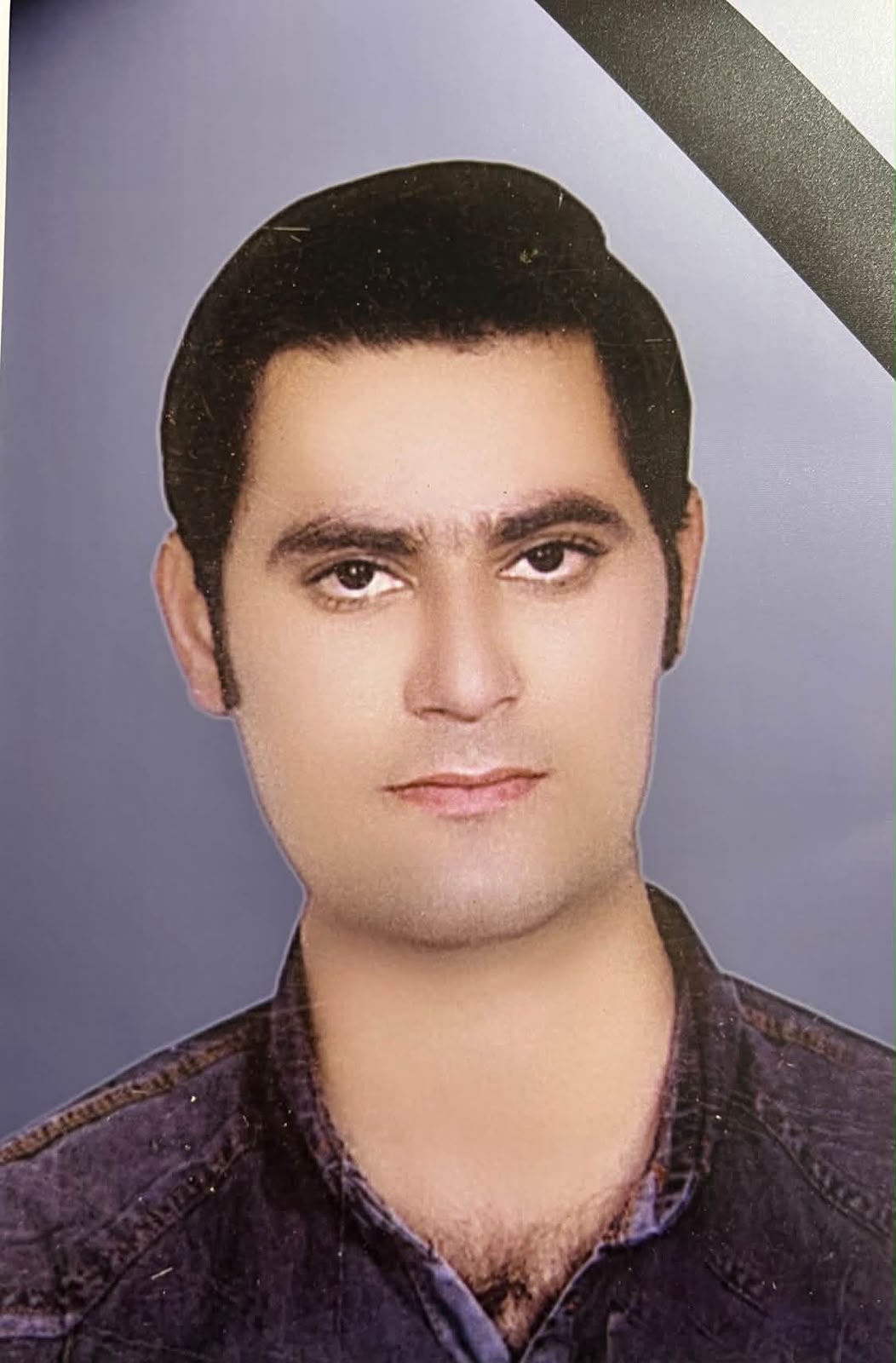 However, IHRNGO has obtained independent information about the events of the day in question which contradict the state narrative. An informed source provided the following account: "Abolhassan and his sister had gone to the tailor for her to pick up her clothes. On the way back, they were stopped at the Bandar Abbas–Minab highway patrol post at Goudo. An officer who was questioning Abolhassan began being violent. He reached his arm through the car window, hit Abolhassan, and grabbed him, even though Abolhassan had a surgical plate in his arm and couldn’t raise it very high. Abolhassan tried to escape the officer's grasp, completely unaware that Jassem Hosseinian had gone in front of the car to remove the front plate, and that is how the collision happened. Following this, authorities fabricated a case claiming the car was carrying contraband."
The source continued: "Authorities claimed Jassem Hosseinian was inspecting a smuggling vehicle but Abolhassan doesn’t have a single criminal case against him, let alone any involvement in contraband trafficking! In the media, they all reported that he was a smuggler, even though his sister was sitting right there beside him the entire time. Local drivers around the area knew Hosseinian for taking bribes and confiscating licence plates. For two years, the family begged the officer's relatives to grant forgiveness, swearing to God that it was not intentional, but they refused."
Describing the judicial proceedings, the source added: "On top of that, the prosecution brought false witnesses who were locals from the area. Two individuals known to be informants [names redacted by IHRNGO] came to court and lied by claiming to have been driving behind the defendant's car. Right in front of the family, they claimed they saw the officer 'rolling like a barrel' and lied by saying the car drove over his head multiple times. But how could anyone turn around and reverse on a narrow highway patrol corridor? Even though the court realised this testimony was a lie, they still took the side of the law enforcement forces."
Those charged with the umbrella term of “intentional murder” are sentenced to qisas (retribution-in-kind) regardless of intent or mitigating factors due to a lack of grading in law. Once a defendant has been convicted, the victim’s family are required to choose between death as retribution, diya (blood money) or forgiveness.
Crucially, while an indicative diya amount is set by the Judiciary every year, there is no legal limit to how much can be demanded by families of the victims. IHRNGO has recorded many cases where defendants are executed because they cannot afford to pay the blood money. Should the victim’s family choose execution, they are not only encouraged to attend, but also to physically carry out the execution themselves.
According to IHRNGO’s 2025 Annual Report on the Death Penalty, at least 747 people including 48 women, were executed for murder charges, the highest number of qisas executions since 2010. Under 7% of the recorded qisas executions were announced by official sources. In 2025, IHRNGO also recorded 566 cases of families choosing diya or forgiveness instead of qisas executions. In the first nine months of 2026, at least 306 people were executed for murder charges.
More from @ihrights
IHRNGO is building a strong civil society, through empowerment of the citizens, promoting and defending the human rights.
Latest Cartoon
Latest Report