Hassan Zadeh: Political differences need not prevent a common defence of human rights
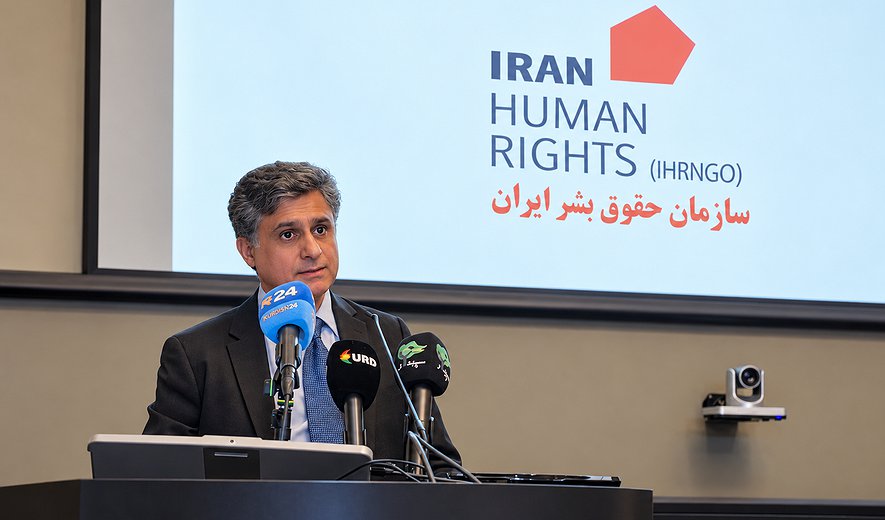
Asso Hassan Zadeh, a representative of the Democratic Party of Iranian Kurdistan, called for cooperation across political divides at the Oslo conference “Iran’s Human Rights Crisis: From Shared Principles to Joint Action”. “We do not need to resolve our political differences to defend human rights together,” he said. “We simply need to set those differences aside when it comes to human rights.”
According to Iran Human Rights (IHRNGO), Hassan Zadeh described the signing of the agreement on minimum human rights principles as the beginning of dialogue and cooperation. Political groups needed to put those principles into practice now. He also called for recognition of every community’s identity, suffering and rights, regardless of political differences.
The conference, held in Oslo on 25–26 September 2026, brought together representatives of political parties and organisations. Organised and hosted by IHRNGO, it was the sixth event in its “Iran and the Transition from Authoritarianism” series.
Hassan Zadeh opened with a childhood memory: a five-year-old Kurdish boy attending a village school, unable to understand his teacher’s language and frightened by threats of punishment. “Is this a question of human rights or national oppression? Is it about teaching methods and protecting children from humiliation at school, or education in their mother tongue?” His answer was both.
Returning to an argument he had made at the previous year’s conference, he said equal citizenship, however essential, could not alone address questions of identity and the political status of peoples and nationalities in multinational states.
He described the agreement, reached by a broad range of opposition groups with the mediation of a human rights organisation, as unprecedented. But signatures were insufficient. “Signing a text does not in itself guarantee its implementation. Nor does it necessarily mean that we share exactly the same understanding of its terms.”
Political groups hoping to uphold human rights tomorrow needed to practise doing so today. “The real work of dialogue and cooperation is only beginning.”
He also drew a clear distinction between a human rights agreement and a political alliance. “We are not creating a mechanism today to form a political alternative for Iran’s future.” Signing the document neither resolved disagreements about Iran’s future structure nor summarised his party’s political demands, including the sharing of political sovereignty.
Debate over the fundamental rights of peoples and the place of different communities in a future Iran would continue in other political forums. Those limits did not diminish the agreement’s importance in protecting human rights and dignity.
Hassan Zadeh linked his party’s decision to sign to the experience of people in Kurdistan under both successive regimes in modern Iran. They had been among the foremost victims of widespread and systematic abuses, he said. “While respecting the rights of others, we want the human rights of our people, our nation, to be respected too.”
A stronger human rights culture would make peaceful discussion of even the most difficult political questions easier. He praised the document’s recognition of every community’s right to advocate and pursue its preferred political future through democratic means.
He also cited his party’s and other Kurdish parties’ record on humanitarian standards, including releasing prisoners of war, treating wounded opponents and avoiding urban bombings. They had previously signed commitments mediated by Geneva Call. The current agreement mattered more to him, however, because it emerged from the shared realities of Iran itself.
Hassan Zadeh then called for scrutiny of how Iran’s political community and Persian-language media reported abuses in Kurdistan, from historical massacres of defenceless civilians to current attacks on Iranian Kurdish parties that were not at war with the Islamic Republic.
“Sometimes political views and disagreements even shape how we see and report human suffering,” he said. “How far have media accounts been influenced by the authorities’ narrative? What words do they use when reporting these atrocities?”
He also questioned the fragmentation of human rights campaigns. “If all these campaigns had acted jointly, consistently and in coordination over the years, would we not now see fewer executions, cases of torture, imprisonments, enforced disappearances and other human rights violations?”
Effective cooperation required a shared language and an outlook that recognised every community’s existence and concerns, he concluded. “We need only take seriously our responsibility for what we sign together, and begin with our own conduct.”
More from @ihrights
IHRNGO is building a strong civil society, through empowerment of the citizens, promoting and defending the human rights.
Latest Cartoon
Latest Report