Mohamadi: Solidarity must lead to practical cooperation
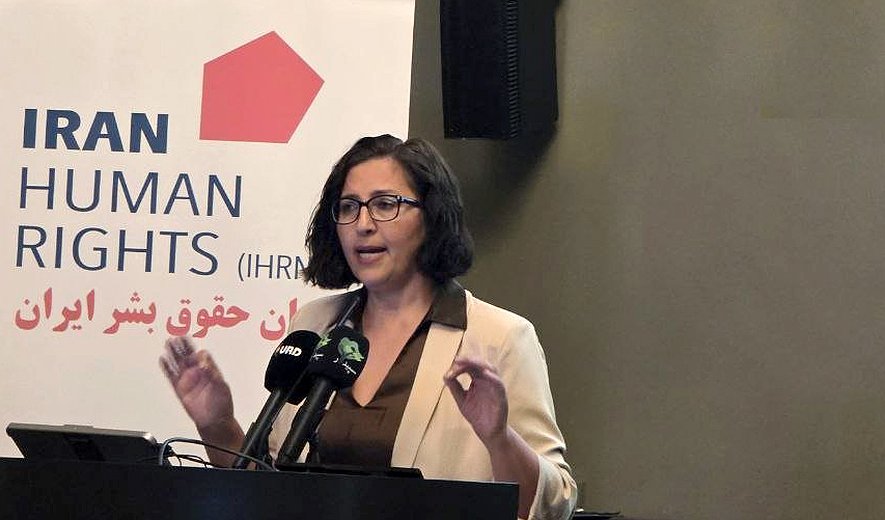
Fariba Mohamadi, a representative of the Komala Party of Kurdistan, called for joint action by political groups at the Oslo conference “Iran’s Human Rights Crisis: From Shared Principles to Joint Action”. “We must now move beyond declarations of solidarity to practical cooperation,” she said. “The value of this pact will become clear when it is reflected in our political conduct.”
According to Iran Human Rights (IHRNGO), Mohamadi identified three tests of commitment to the agreement: defending victims without discrimination, respecting opponents’ rights and responding jointly to human rights violations. She also stressed that human rights encompassed national, gender, cultural and linguistic rights, as well as peoples’ right to self-determination.
The conference, held in Oslo on 25–26 September 2026, brought together representatives of political parties and organisations. Organised and hosted by IHRNGO, it was the sixth event in its “Iran and the Transition from Authoritarianism” series.
Drawing on Benedict Anderson’s conception of nations as imagined communities, Mohamadi asked whether women, Kurds, Baluch, Turks and Arabs had been included in the dominant understanding of the “Iranian nation” over the past century. Her answer was no. She criticised the exclusion of other national identities and argued that speaking about national oppression in a country with a history of it should not be dismissed as extreme nationalism.
Thanking IHRNGO for its work, she described the agreed principles as the signatories’ minimum demands. “It is regrettable that we live in a country where we are still denied basic rights and must seek agreement on such elementary principles.”
Opposing executions and defending political prisoners were vital, she said, but human rights extended further. “One of the fundamental principles of human rights is peoples’ right to self-determination.” Political groups must not distort or exclude rights simply because they conflicted with their own policies or aspirations.
The representative of the Komala Party of Kurdistan described the overlapping forms of oppression experienced by women and different peoples in Iran. General statements about human rights could not substitute for addressing their particular experiences. “Slogans or an appealing political programme are not enough. We need a genuine understanding.”
She also criticised the reproduction of a culture of dominance within the opposition itself. Even exceeding an equal allocation of speaking time could reveal a sense of entitlement. “We do not prove our convictions through words and slogans. Our actions and conduct show whether we truly believe what we proclaim.”
Her party had signed the document despite its failure to encompass all its demands, she said. Developments in Iran and the wider region made serious cooperation among opposition groups essential. Yet she insisted: “No future for Iran can be truly democratic and stable if the national rights and right to self-determination of the people of Kurdistan and other peoples are ignored.”
Differences over the form of government, the future political structure, relations between the centre and the regions, and the national question were natural. Resolving them was not a prerequisite for defending human rights. “We do not need to become a single party or share a political programme. But we do need a common commitment to human rights.”
The first test was whether that commitment applied to everyone. “Defending a political prisoner who shares our views is easy. The real test comes when the prisoner disagrees with us politically. If their rights are violated, will we still stand beside them?”
A victim’s political, national or religious identity must not determine whether others defended them. Abuses against Kurds, Baluch, Arabs, Turks, Turkmen, Persians, Bahá’ís, Christians, Sunnis, Shias, women, journalists, students or political and civil society activists concerned everyone. “Human rights have meaning only when they apply to all.”
The principles must also bind the signatories themselves. “If we defend freedom of expression today, we must tolerate our opponents’ freedom of expression tomorrow.” The same obligation applied to freedom of assembly, opposition to repression and recognition of meaningful participation by the people of Kurdistan in decisions about their future.
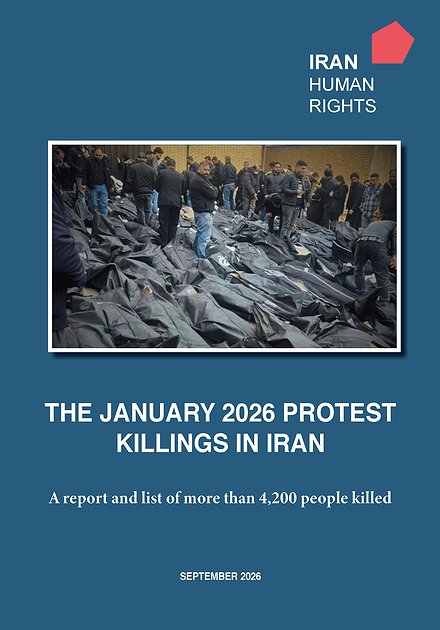
Mohamadi concluded by calling for joint responses to serious abuses and accurate, responsible documentation. She urged a united condemnation of drone and missile attacks on Kurdish parties and atrocities in Baluchistan. A united opposition, she argued, could also have brought the January killings more forcefully before international institutions.
“Human rights prove their worth when we defend them even when doing so does not serve our own interests.”
Translated from Farsi via machine translation and lightly edited for clarity.
More from @ihrights
IHRNGO is building a strong civil society, through empowerment of the citizens, promoting and defending the human rights.
Latest Cartoon
Latest Report