Bahmani: Criminal accountability must not wait for political change
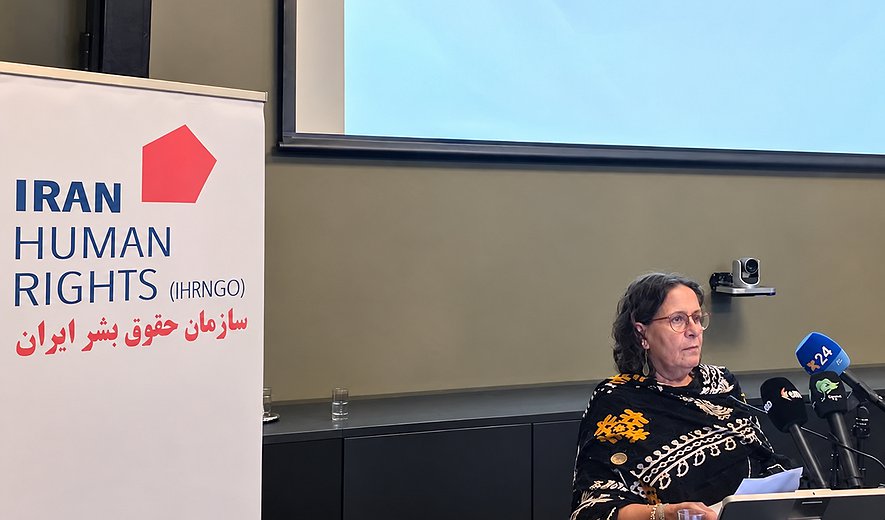
Nahid Bahmani, a representative of the Komala Party of Iranian Kurdistan, proposed a legal working group to pursue accountability for human rights abuses at the Oslo conference “Iran’s Human Rights Crisis: From Shared Principles to Joint Action”. “Criminal accountability must not be deferred until after political change in Iran,” she said, calling for professional documentation, witness protection and careful use of universal jurisdiction.
According to Iran Human Rights (IHRNGO), Bahmani outlined two proposals for practical cooperation between political parties and human rights organisations: common standards for documenting abuses, and a legal working group involving independent lawyers to assess possible proceedings in different countries. Both required respect for the independence of human rights organisations and the right to a fair trial.
The conference, held in Oslo on 25–26 September 2026, brought together representatives of political parties and organisations. Organised and hosted by IHRNGO, it was the sixth event in its “Iran and the Transition from Authoritarianism” series.
Cooperation on human rights need not depend on political agreement, Bahmani argued. “Political groups are not expected to agree today on the form of a future government, party programmes or every disputed issue.” The questions were what they could do now to confront widespread abuses, and what practical obligations followed from accepting shared principles.
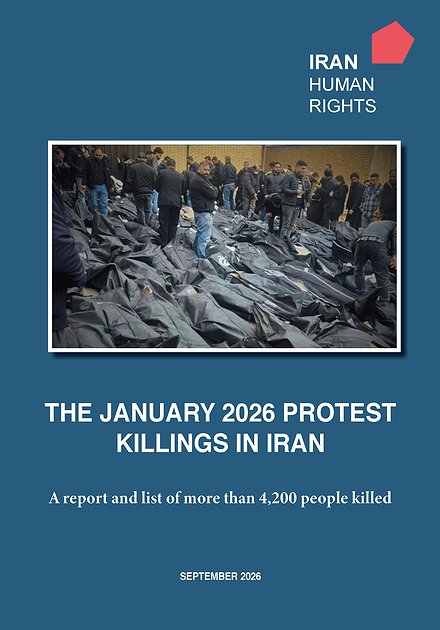
She cited findings by the UN fact-finding mission and Amnesty International concerning killings, detention, torture and crimes against humanity. She also referred to IHRNGO’s publication of the names of more than 4,200 people killed during the January protests, including at least 420 women and 281 children.
“Every verified name is part of a truth that must be preserved for the family, society and any future accountability process.” Information needed to be collected in a form that could support independent investigations, judicial proceedings and transitional justice.
The first task was to strengthen documentation. “Reporting a human rights violation, publishing a victim’s name or obtaining a video is important. But it does not necessarily amount to evidence usable in criminal proceedings.”
Investigators should record sources, dates and locations, preserve original files and technical data, and document how evidence was received and stored and testimony obtained. “The witness’s informed consent, confidentiality, and the safety of victims and their families must take precedence over rapid publication.”
Citing the Berkeley Protocol on digital evidence, Bahmani proposed common standards for verification, preservation, witness protection and the referral of information. “Human rights documentation must not become subordinate to competition between parties.”
Her party’s legal office was ready to help receive, preserve and organise information, particularly concerning Kurdistan. “The aim is not to create a party archive of victims.” Parties’ local networks should support independent documentation under professional standards. With agreement, IHRNGO could help coordinate those standards.
Turning to accountability, Bahmani discussed universal jurisdiction and other forms of extraterritorial jurisdiction. Legal requirements, including those concerning a suspect’s presence, prosecutorial powers and procedural rules, varied between countries. “We are not proposing scattered, politically driven complaints.”
Instead, a coordinated working group of independent lawyers, supported by political parties, should assess potential cases country by country. Before proceedings began, it should examine the evidence, individual responsibility, command structures, the circumstances of victims and witnesses, and the jurisdiction of the court concerned.
“Individual criminal responsibility must be the governing principle.” Assigning collective responsibility to an institution, family, ethnic group or religion was incompatible with justice, she said. Even those accused of the gravest crimes must have the right to a defence and a fair trial before an independent judge. “This is precisely where the distinction between justice and revenge becomes clear.”
Commitment to human rights also meant defending opponents and condemning abuses regardless of the identity of either victim or perpetrator. “If a right is valid only for our friends, it can no longer serve as a shared basis for human rights.”
Those obligations must endure through the transition. “Transitional justice does not begin the day after a change of government.” Preserving records, establishing the truth, supporting victims and preventing the destruction of evidence were already laying its foundations. Any future process must bring together truth, justice, reparations and guarantees of non-recurrence.
Bahmani concluded by announcing that her party would submit detailed written legal proposals to IHRNGO. “Parties can retain their political differences while agreeing on a boundary that no political rivalry has the right to cross,” she said. “That boundary is human dignity and fundamental rights.”
Translated from Farsi via machine translation and lightly edited for clarity.
More from @ihrights
IHRNGO is building a strong civil society, through empowerment of the citizens, promoting and defending the human rights.
Latest Cartoon
Latest Report