Boladai: Shared principles must lead to joint action
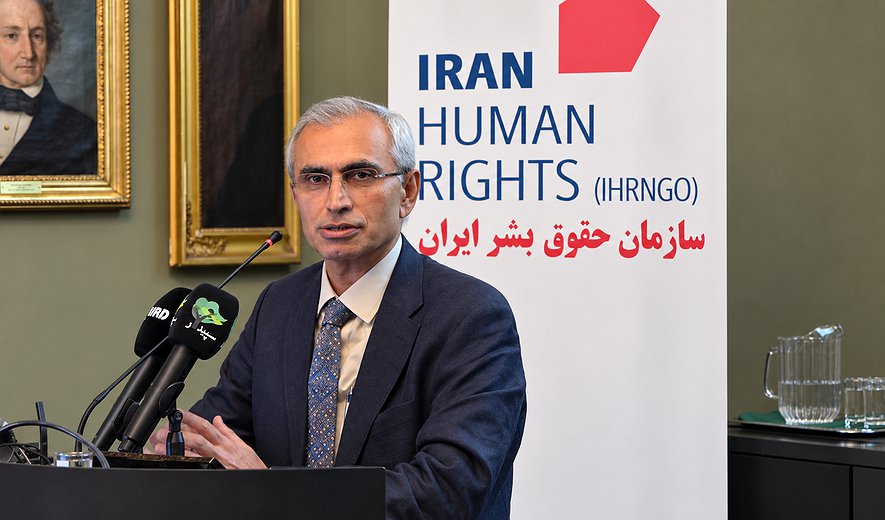
Nassar Boladai, secretary-general of the Balochistan People’s Party, called for practical cooperation between political parties in defence of human rights. “We must show that we are taking action,” he said. “We cannot simply meet, talk, appear on television or radio and then let the matter be forgotten. This process must continue.”
According to Iran Human Rights (IHRNGO), Boladai made the remarks at the conference “Iran’s Human Rights Crisis: From Shared Principles to Joint Action”, held in Oslo on 25–26 September 2026. The event brought together representatives of political parties and organisations and was the sixth conference in IHRNGO’s “Iran and the Transition from Authoritarianism” series.
Boladai described the agreement signed by 15 organisations as an important advance. Its significance went beyond the signing ceremony: parties had set aside their own programmes to make human rights the basis of cooperation. “Today we have placed ourselves on an equal footing, recognising that we are all human beings and proceeding on the basis of UN human rights principles.”
Held between the anniversaries of Jina Amini’s killing and Bloody Friday in Zahedan, the gathering continued the spirit of the Woman, Life, Freedom movement, he argued. That movement sought to end discrimination in all its forms.
He recalled a slogan used in Balochistan: “Freedom, equality, no to dictatorship.” Its message went beyond the choice between a republic and a monarchy. “Dictatorship is unacceptable, whatever form the political system takes. Freedom and equality matter above all.”
Boladai challenged governments’ use of sovereignty to obscure their obligations. International law imposed limits as well as recognising state authority. IHRNGO’s initiative called on political groups aspiring to govern Iran to accept those limits too.
“A state cannot invoke its authority to justify unlimited use of force.” Government, he said, had a duty to protect both individual and collective rights.
Nor could a general appeal to shared humanity substitute for recognising particular forms of oppression. “In Iran, some people are oppressed because of their gender, others because of their national identity.” Human rights principles should guide efforts to address both.
Boladai called cooperation between political parties and human rights organisations a turning point. Although Iran’s authorities treated even demands for linguistic and human rights as political issues, the conference demonstrated that cooperation was possible.
The next task was to choose achievable projects suited to the signatories’ resources and capacity. “We must move from shared principles to joint action.” Those responsible for follow-up should turn the proposals into practical programmes.
He also criticised parties’ tendency to view every issue through an electoral or organisational lens. Despite their differences, discussions at the conference had shown a commitment to cooperation. His party was ready to contribute to both human rights work and political efforts.
The priority was to help people overcome economic hardship, environmental degradation, repression and killings so that they could lead normal lives. “For now, we should put our political programmes in the freezer and focus on what people want.”
Even in established democracies, party programmes took years to pursue and remained subject to electoral competition. Iranian parties first needed conditions in which they could operate freely.
Boladai concluded by calling for human rights to guide the present struggle, the transition and Iran’s next constitution. “We should be able to say that we have a sound social contract.” The agreement, he said, was a promising beginning.
Translated from Farsi via machine translation and lightly edited for clarity.
More from @ihrights
IHRNGO is building a strong civil society, through empowerment of the citizens, promoting and defending the human rights.
Latest Cartoon
Latest Report